~/about $ cat about.md
About_me
20+ years of uptime, one careful human
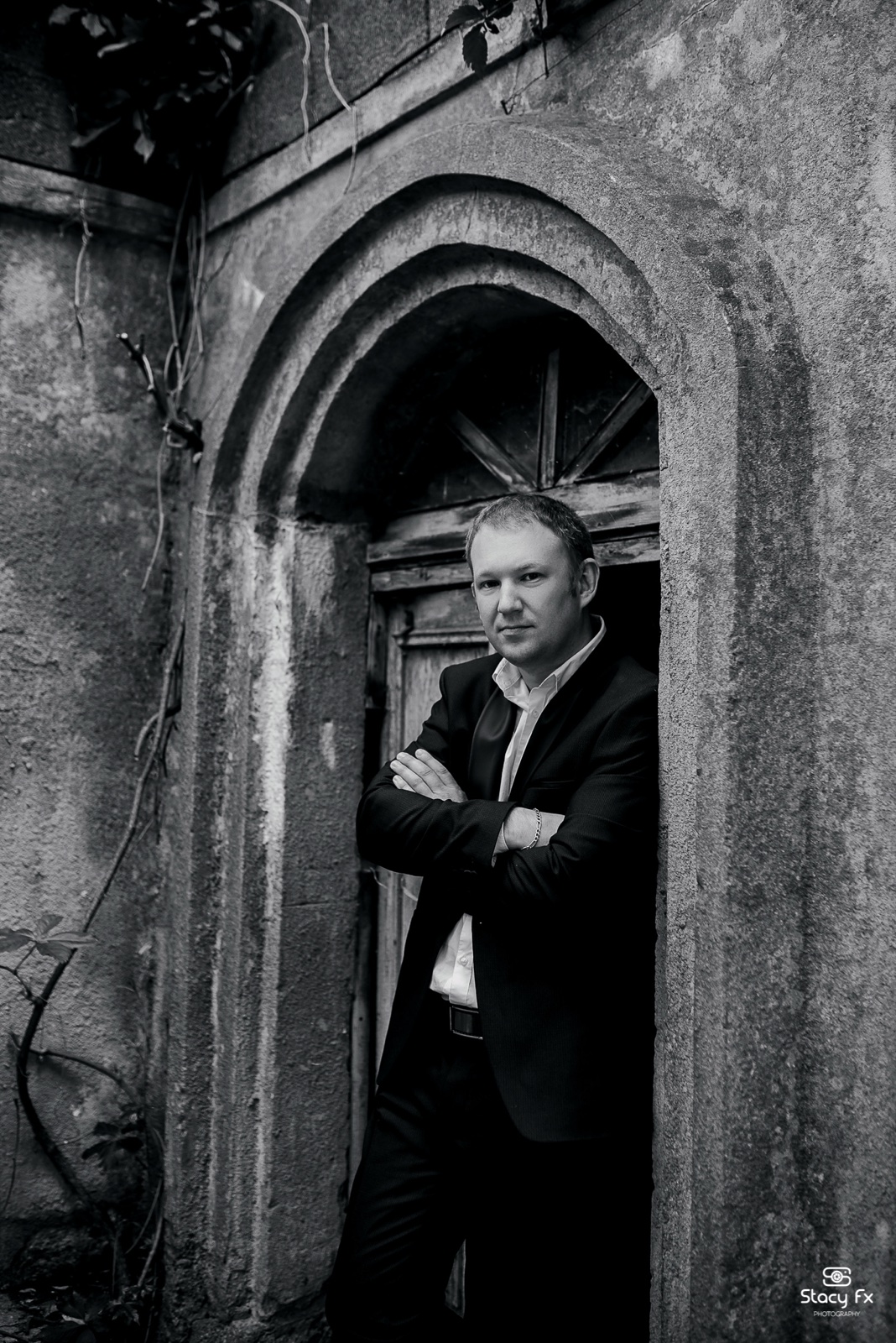
The short version
I'm Justinas — known in most terminals as e1z0. I've been a Unix systems administrator since 2005, a freelancer for over twenty years, and a programmer for as long as I can remember, though I've never felt the need to call myself a "software engineer". Titles are for email signatures. Systems are forever.
How it started
I got into IT the old way: curiosity, plus the fact that back then people who understood computers were treated roughly like wizards. (That era has ended. I checked.)
I was born into DOS, grew up with DOS and Linux, spent years running FreeBSD as my desktop, returned to Linux, and eventually settled on macOS — while at work, inevitably, there's still Windows. Along the way I explored the roads not taken: Solaris, BeOS (now Haiku), Plan 9, Palm OS, FreeDOS. I've always had a soft spot for alternative operating systems — the ideas that lost the market but won the argument.
My first serious work was on the earliest big Lithuanian internet forums and hobby projects that accidentally grew into corporate systems — and I grew into their systems administrator. From day one it was Debian and Slackware on the servers; I was a member of the Lithuanian BSD User Group, contributed to open-source projects, and wrote about technology constantly: since 2006 I've maintained wiki.eofnet.lt — a Lithuanian-language IT reference covering everything from BSD to databases to IoT — and later ran the Unix Master blog, tutorials and war stories about Unix systems, networking and hardware.
The language pilgrimage
My programming path reads like a geological record: Pascal, then Delphi, then Perl, PHP, C#, a thick sediment layer of Bash/sh/Tcl, then C, Objective-C, Go, and finally Swift.
I'm not a language fanboy. Languages either solve problems or manufacture new ones — usually both, on the same afternoon. Each one is strange and beautiful in its own way, and I've enjoyed working with all of them. Except that it's been a while since Pascal and I last spoke. We're fine. It's not awkward.
What I actually believe about software
Modern software is fast-paced, bloated, and riddled with bugs. Nobody is even surprised anymore that half of it — desktop applications included — is written in JavaScript. Twenty years ago that would have been the punchline of a joke, not an architecture decision.
Look at the computer that took humans to the Moon, then look at a chat app that needs a gigabyte of RAM. Maybe we don't go back to the Moon because we're afraid the JavaScript would crash halfway there.
For my part, I try to reduce chaos rather than add to it: I write software that is efficient, native, and compiled to real machine code, instead of forcing every task through a browser engine. Some of what I've built ended up enterprise-grade — clustered, redundant, running quietly for years without anyone noticing. That's usually a good sign. One day history will remember that there were people who fought like partisans for software that was optimized, reliable, fast and built properly. I intend to be on that list.
On one hand I'm an entrepreneur, on the other a futurist. I have never worked purely for money, and I never will. I work on things that interest me — things that have meaning in this otherwise grey everyday life.
Freelance by conviction
Since 2005 I've been an independent freelancer, and I intend to die one. I've done my tours of duty in Lithuanian companies, large and small — enough to confirm that a fixed desk from 8 to 17 is a technology for converting my lifetime into meetings. I physically cannot sit in an office doing nothing, which I'm told is a critical corporate skill.
I need one of exactly two states: full action or full shutdown. When I burn out, I don't do wellness apps — I sleep. Sometimes for two days straight. It's a very efficient patch cycle.
The clients I've enjoyed most were individual customers from the Netherlands and Germany — straightforward people, clear requirements, no theatre. The harder periods of my life taught me a simple loop: the more difficult it gets, the harder you push, and the more independent you come out the other side. I ran that loop until it converged. Now I don't fear challenges; I collect them.
These days the commercial side lives at EofNET — server administration, networking, automation and development services. Details on the services page.
The countryside node
I don't like cities. To be fair, I'm not wild about villages either — I function best alone, door closed, wrestling problems nobody interrupts. So my wife and I (two IT people who left the city) run a small countryside retreat in the Ukmergė district: a few hectares of Lithuanian quiet where interesting guests arrive, we talk about everything, and they never once suspect they're chatting with a sysadmin. It's the best cover identity I've ever had.
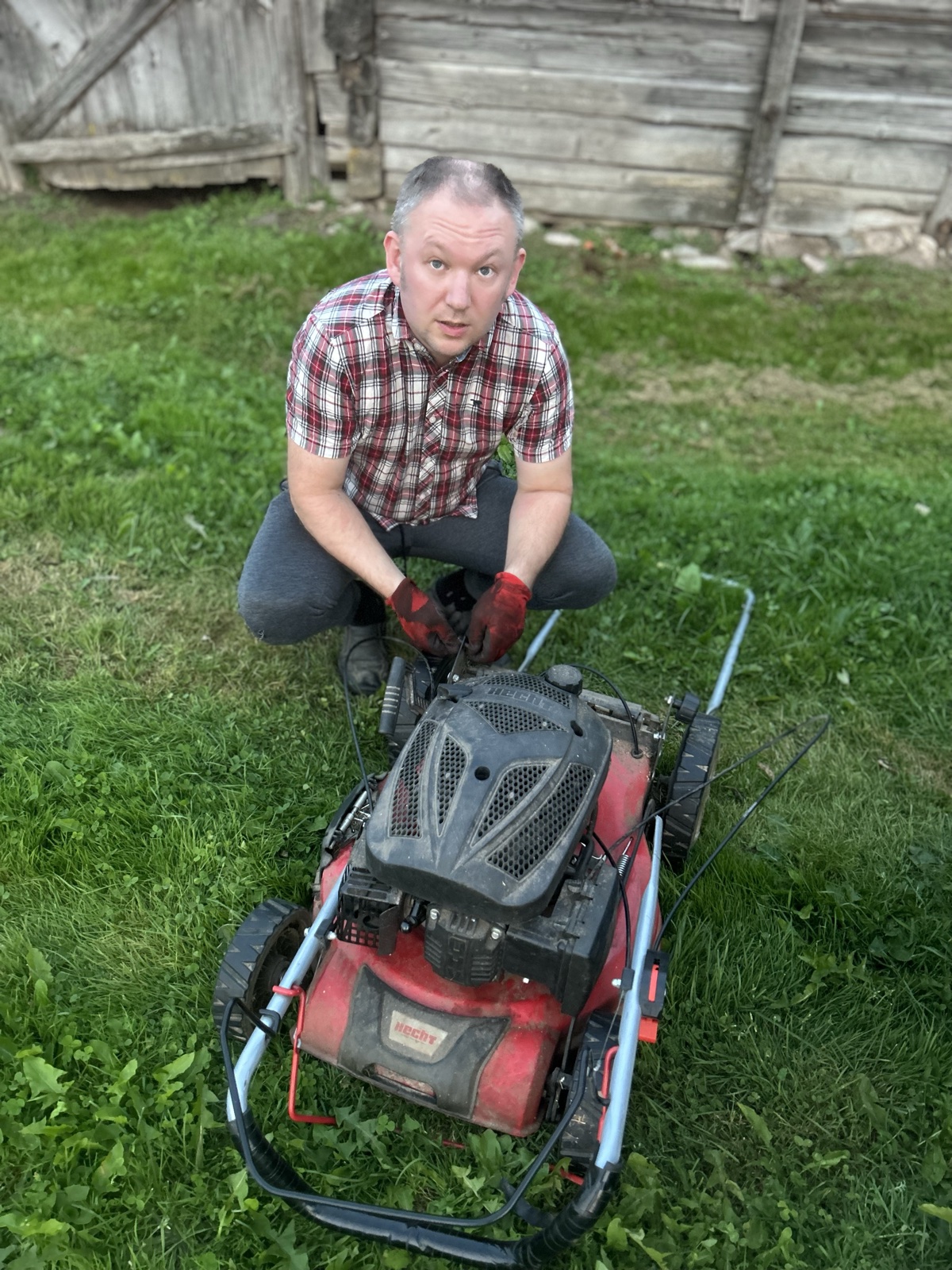
We dream of building a properly self-sufficient life out here — closer to nature, further from notification sounds. Out here I do almost everything myself: I can put up a building, dig a trench, fix the water pump, service the boiler. The one exception is cars: I don't stick my hands deep into engine oil. I trust mechanics. My respect for them grows with every oil stain I successfully avoid.
The lab
My homelab is the kind that started as "just one server" and now spans multiple locations: VLANs, WireGuard tunnels between sites, Proxmox, MikroTik, old HP iron, custom Docker images, clustering, failover, ISP switching and other questionable routing ideas. Some experiments accidentally turn into production-grade solutions. Others become lessons. Both outcomes are wins.
I also provide free Unix shell accounts at EFN.lt — a public playground for shell addicts and curious minds who want to touch a real Unix system without owning one. Someone gave me that chance once. I'm returning the favor at scale.
The smart home runs on ESP8266/ESP32 and a growing Zigbee network (because Wi-Fi alone wasn't complicated enough): pellet-level monitoring for the boiler, CO₂/VOC/temperature/humidity/water-leak sensors, relays, motion and ultrasonic sensors — most of it in 3D-printed enclosures that survive actual field conditions.
And then there's the vintage collection. Modern technology is great, but old technology has character. I collect and restore vintage computers and run vintage2000.org — a place for old machines, strange ideas, and people who understand that a 30-year-old computer is still perfectly usable (because it is). HP Jornada palmtops running Debian, IrDA bridges giving 90s PDAs internet access, Wi-Fi over serial. If it has a serial port, it has a soul.
Current status
I'm 40, I sleep about three hours a night (we're investigating, the logs are inconclusive), and I still sometimes feel like the kid for whom everything in this world is new. There's too much left to try — that's the whole problem, and I refuse to fix it.
I've never really written publicly before. This site is me deciding that at 40 it's time to chmod o+r my life. Probably nobody needs it. But maybe what I build will be interesting — or at least useful — to someone. That's enough of a return value for me.
I don't build software because I have to. I build it because it's fun, useful, and someone has to keep things sane.